


HCG is officially classed as a polypeptide hormone and sits in its own protective niche – whereas the other options available for steroid support fall into either the SERM or AI category (typically), this one has a place of its own.
Officially classed as a polypeptide hormone / glycoprotein; the manner in which this item exerts its effects is completely different to the mechanism of action on display with the aforementioned item types.
What Is A Polypeptide Hormone And What Do They Do For Us?
 Polypeptides are a molecule containing as many as 200+ amino acids.
Amino acids are considered to be the building blocks of the human body, and they are responsible for unlocking neurological responses through the stimulation of the nervous system. Different amino acid sequences are capable of exerting different effects – for instance, some peptides contain a unique amino acid “code” that allows them to trigger the release of growth hormone, whereas others contain a “code” that allows them to instigate muscular recovery.
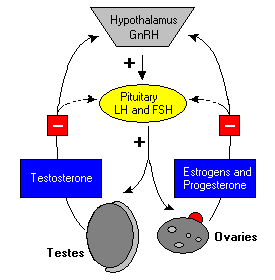
In this particular instance, HCG is a pre existing hormone (not man made) that exists within the female body and contains a unique code that allows it to mimic Luteinising Hormone (LH.) In conjunction with FSH (Follicle Stimulating Hormone) – LH is considered as being the most important hormone needed for the production of testosterone in males.
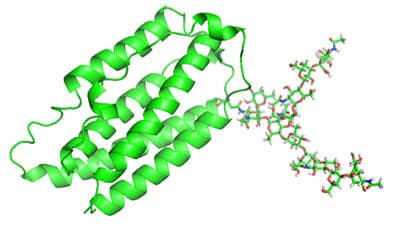
HCG is also classed as being a glycoprotein, due to the manner in which its constitution is formed.
What’s A Glycoprotein And Why Are They Important?
Glycoproteins are simply peptide chains (as previously mentioned) with a glycogen molecule attached to them.
This glycogen molecule can impact the manner in which the amino acid sequence functions, but primarily it is used as a means of transporting the peptide molecule to its target destination.
These protein types often feature heavily as part of the immune, digestive and reproductive systems (as per the example we are currently observing.)
Should I Get Naturally Sourced Or Lab Manufactured HCG?

This is an excellent question, and one that really does need to be heavily considered before making a HCG purchase of any kind.
This hormone (HCG) is actually synthesised by the placenta during the early stages of pregnancy, therefore needs to be sourced from the urine of pregnant women.
This alone can put some people off using it in its “natural” form. There is also the question of sterilisation, and some feel that this means of utilising HCG is somewhat unsanitary.
This was of course the only way anyone could administer HCG previously before the advent of the fully synthesised variants we see today. It has to be said that it doesn’t have a particularly bad track record in terms of safety, so it is perhaps likely that these concerns over sterilisation were unwarranted.
Regardless, one element that we must definitely consider in this debate is cost; “true” HCG is more expensive than the synthesized variant as a result of the means in which it needs to be sourced, therefore purchasing the man made version will likely prove to be a better alternative for some.
You should make your choice in this instance based on your budget and preferences – neither version is necessarily better than the other.
The Role Of Monomers

.
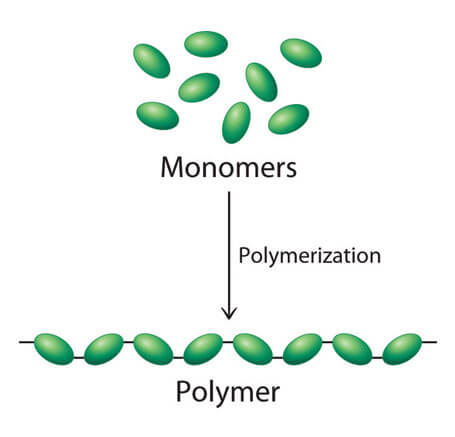
Monomers are small molecules that can bind to one another in order to create polymers. This is basically how cell / molecule multiplication takes place.
In this instance, HCG is able to interact with Luteinising Hormone monomers, triggering a multiplication response that ultimately allows luteinising hormone to expand its presence within the body.
This in turn then leads to the enhanced production of testosterone within the male body.

HCG And Pregnancy
As previously discussed, HCG is a naturally occurring hormone synthesized during the pregnancy process by the placenta. HCG levels actually double every 2 – 3 days during the early stages of the pregnancy process.
The purpose of HCG is to provide a protective sheath around the female egg known as the “corpus luteum” – this all important membrane “feeds” or “transfers” hormones to the egg in order to develop the foetus.
Throughout the pregnancy, HCG levels maintain in order to ensure that this protective membrane stays in place, thus guaranteeing a healthy baby.